



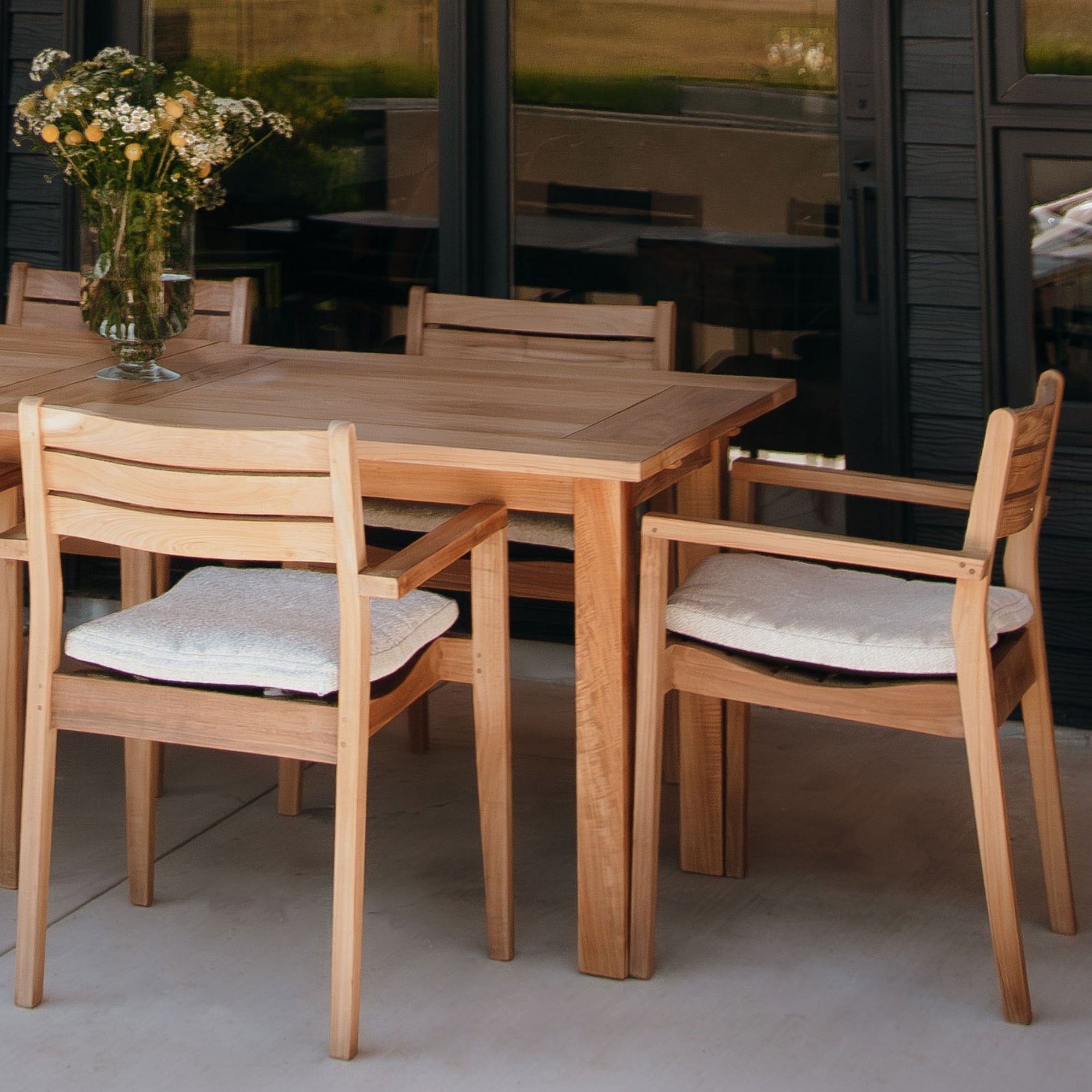
Walk through any furniture showroom or browse outdoor furniture online and you'll encounter dozens of materials described as durable, weather-resistant, or built for the outdoors. But not all woods perform the same way once they're exposed to sun, rain, humidity, and changing temperatures.
Softwoods such as pine and cedar are common. Hardwoods like acacia, eucalyptus, oak, and teak offer another set of characteristics. And increasingly, engineered and synthetic materials are entering the conversation as well.
So where does teak fit in?
Teak is a hardwood, but its combination of natural oils, density, durability, and resistance to moisture has made it particularly well suited for furniture that needs to perform both indoors and outdoors.
Let's take a closer look at what makes teak different.
Hardwood vs. Softwood: What's the Difference?
The terms "hardwood" and "softwood" can be slightly misleading. They don't necessarily describe how physically hard or soft a piece of lumber is.
Instead, the classifications refer primarily to the type of tree the wood comes from.
Softwoods generally come from coniferous trees such as pine, fir, spruce, and cedar. These trees tend to grow relatively quickly, making many softwoods widely available and economical.
Hardwoods come from broad-leaved trees and include species such as oak, maple, walnut, acacia, eucalyptus, and teak. Many hardwoods grow more slowly and develop dense wood structures that make them desirable for furniture, flooring, cabinetry, and other applications where durability matters.
Teak belongs firmly in the hardwood category — but even among hardwoods, it has some unusual characteristics.
What Makes Teak Unique?
One of teak's defining characteristics is the natural oil contained within the wood.
Those oils help protect teak against moisture, decay, and many of the challenges associated with exposure to the elements. Unlike furniture that depends entirely on a surface coating for protection, teak's natural properties are part of the wood itself.
That makes teak particularly useful for furniture that may encounter rain, humidity, temperature changes, and everyday wear.
It's one reason teak has a long history of use anywhere durability and exposure to moisture are important.
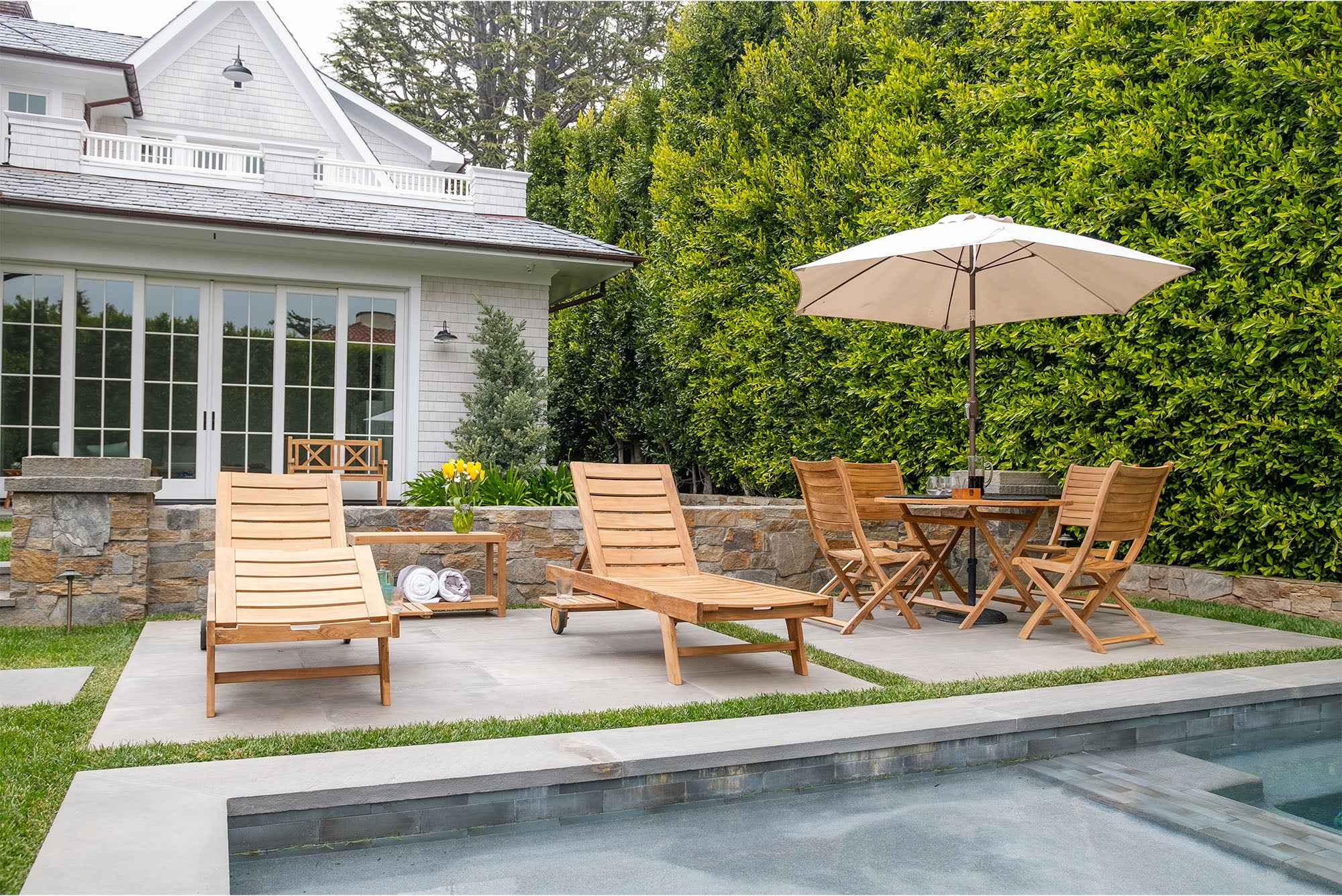
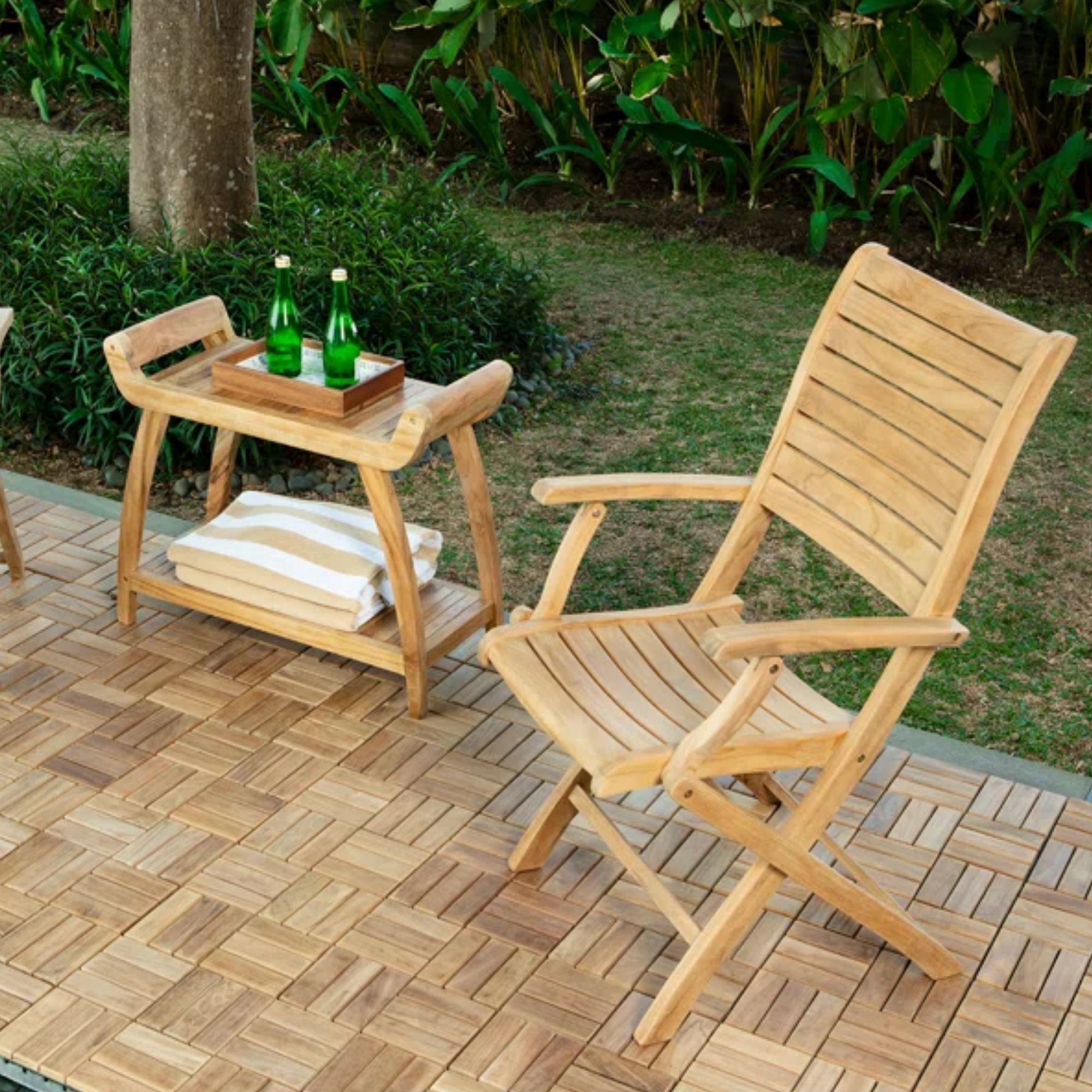
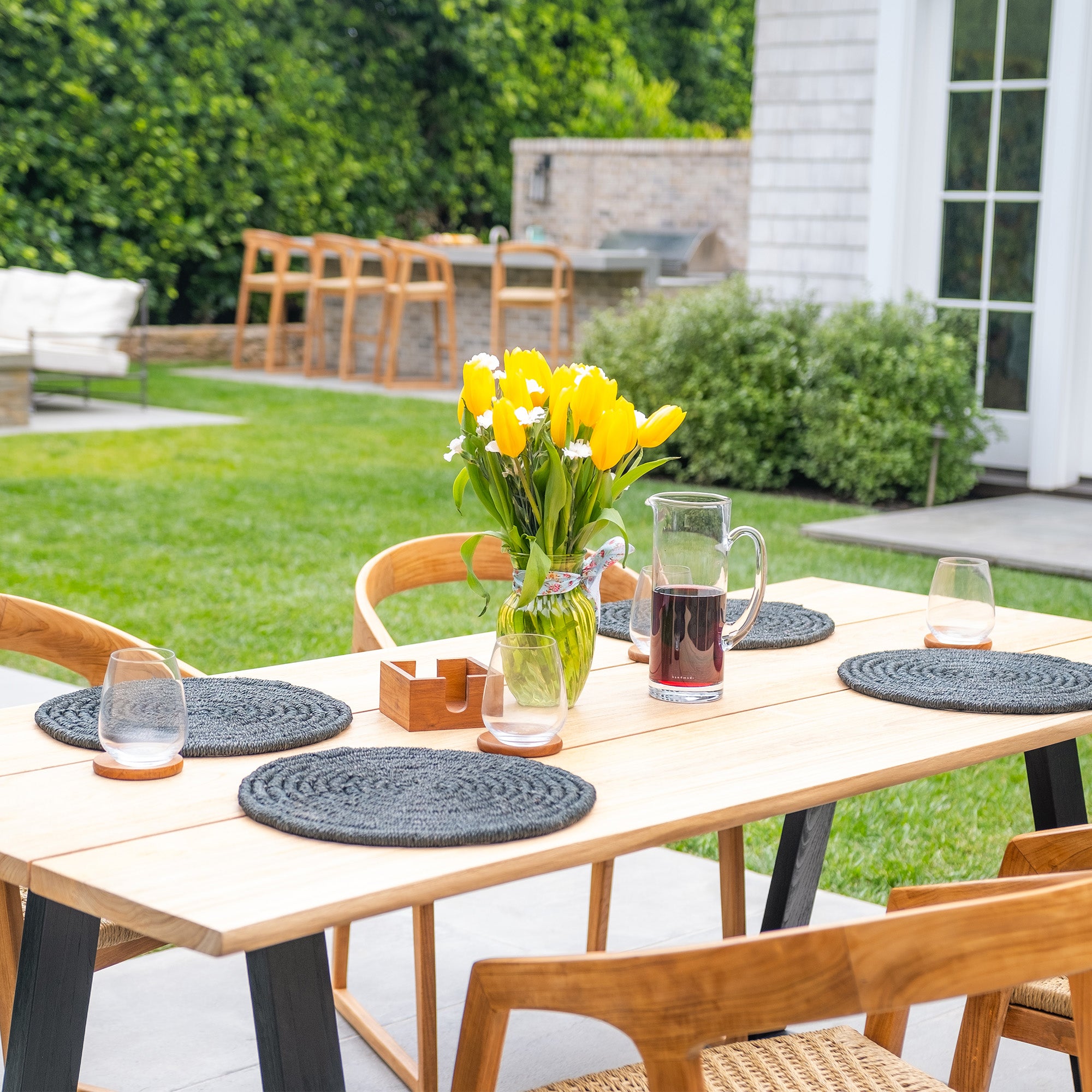
For homeowners, those same characteristics translate exceptionally well to patios, decks, gardens, bathrooms, and other indoor-outdoor spaces.
Teak vs. Other Popular Furniture Woods
There isn't necessarily one "best" wood for every application. Price, appearance, maintenance, environment, and expected lifespan all play a role.
Pine
Pine is a widely available softwood that's lightweight, affordable, and easy to work with. It's commonly used for indoor furniture and can be used outdoors when properly treated and maintained.
Because pine doesn't naturally have the same resistance to moisture and decay as teak, outdoor pine furniture generally depends more heavily on protective finishes and ongoing maintenance.
Cedar
Cedar is another softwood frequently associated with outdoor applications. It's lightweight, aromatic, and naturally resistant to certain insects and decay.
Its relatively low weight can be an advantage when furniture needs to be moved frequently. However, cedar is softer than many hardwoods and can be more susceptible to dents and surface damage.
Acacia
Acacia is a dense hardwood that has become increasingly popular for outdoor furniture. Its warm appearance and relatively accessible price point can make it an attractive alternative to teak.
Like many woods used outdoors, however, maintaining its original appearance generally requires periodic care and protection from prolonged exposure.
Eucalyptus
Eucalyptus offers another hardwood option for outdoor furniture. It grows relatively quickly and can provide good strength and durability.
It can perform well outdoors when properly maintained, but typically requires more regular finishing or sealing to help protect it against moisture and weathering.
Teak
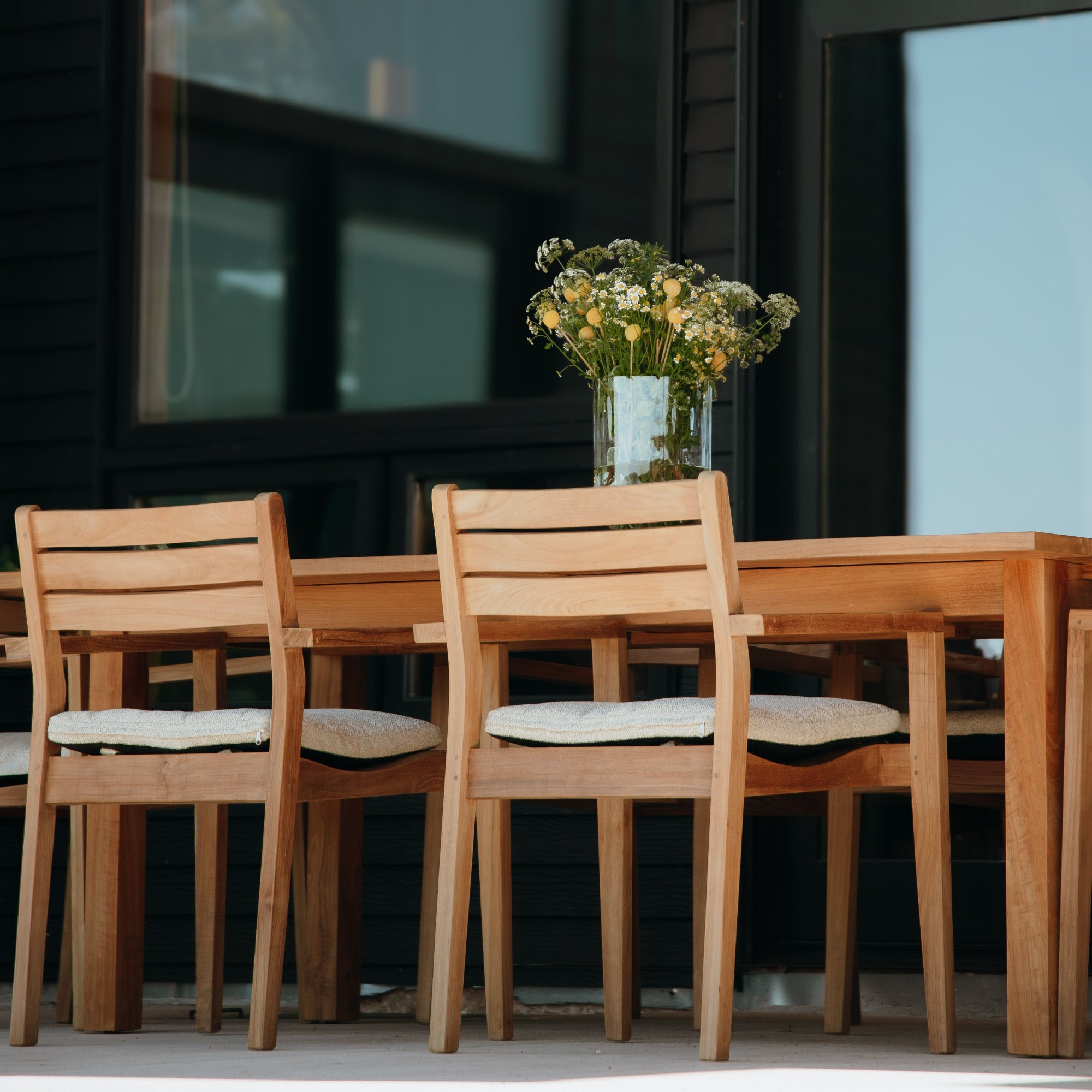
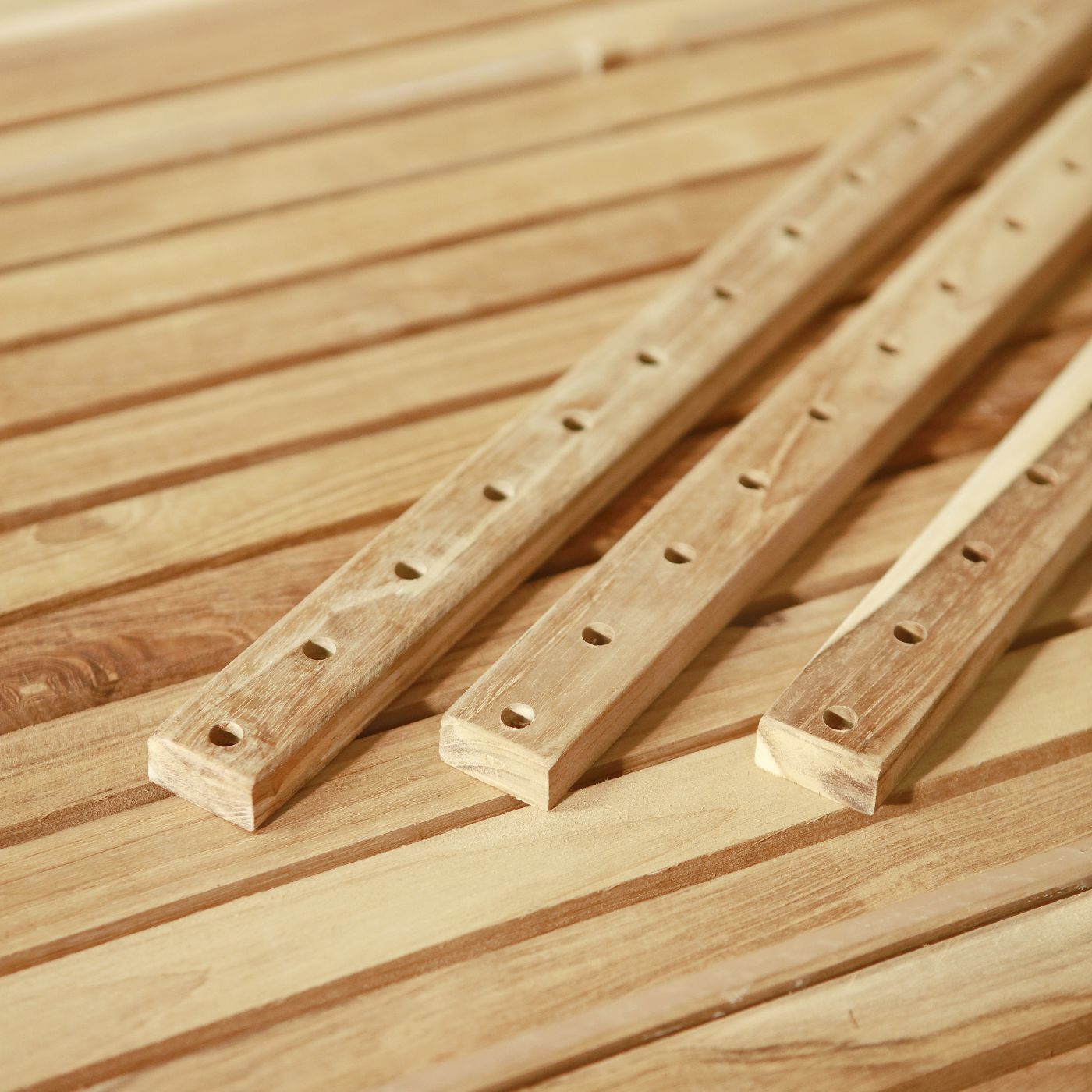
Teak combines the strength associated with hardwood with naturally occurring oils that help the wood withstand moisture, rot, and outdoor exposure.
That combination is what makes teak unusual.
Rather than simply being a beautiful hardwood that can be used outside, teak possesses natural characteristics that make outdoor environments one of its strengths.
What Happens to Teak Outdoors?
One of the most interesting characteristics of teak is how it changes over time.
New teak typically has a warm, golden-brown appearance. When left outdoors and exposed to sunlight and weather, untreated teak gradually develops a soft silver-gray patina.
That color change is natural.
It doesn't mean the wood is rotting or losing its structural integrity. Many homeowners actually prefer the weathered appearance and intentionally allow their furniture to develop its silver finish.
Others prefer teak's original golden tone and periodically maintain the surface to help preserve that appearance.
Either approach can work. The decision is largely aesthetic.
Why Teak Works So Well for Outdoor Furniture
Outdoor furniture has a difficult job.
It may sit through summer heat, spring rain, humidity, cool nights, and dramatic temperature changes — all while being expected to remain comfortable and attractive.
Materials used outdoors therefore need to handle much more than everyday furniture wear.
Teak's natural properties make it particularly well suited for that environment:
-
Natural moisture resistance helps the wood perform in wet and humid environments.
-
Natural oils provide protection without requiring the wood to rely exclusively on applied finishes.
-
Dense hardwood construction creates strong, durable furniture.
-
Dimensional stability helps properly constructed teak furniture withstand changing outdoor conditions.
-
Natural aging allows untreated teak to develop its characteristic silver-gray patina rather than requiring constant refinishing simply to remain attractive.
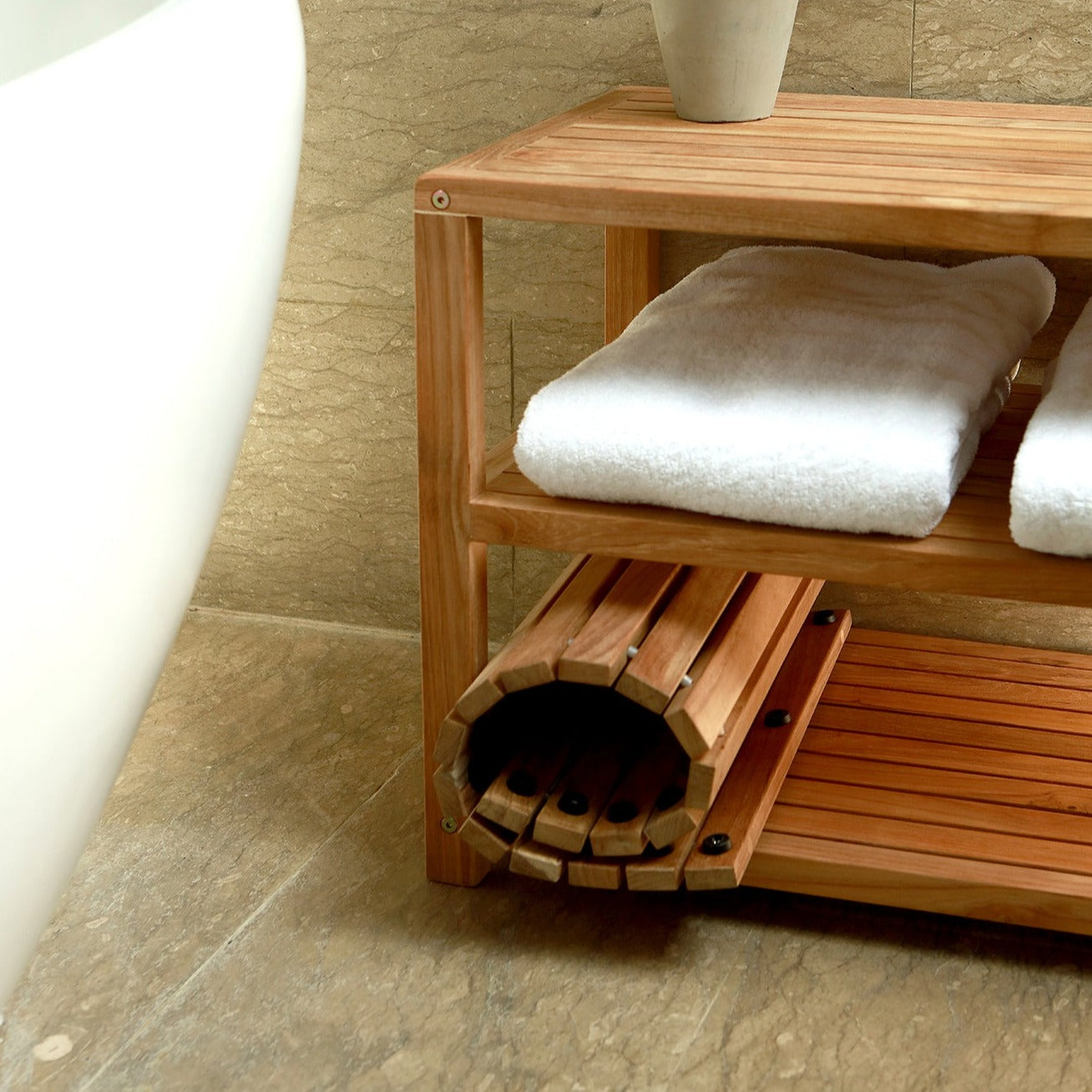
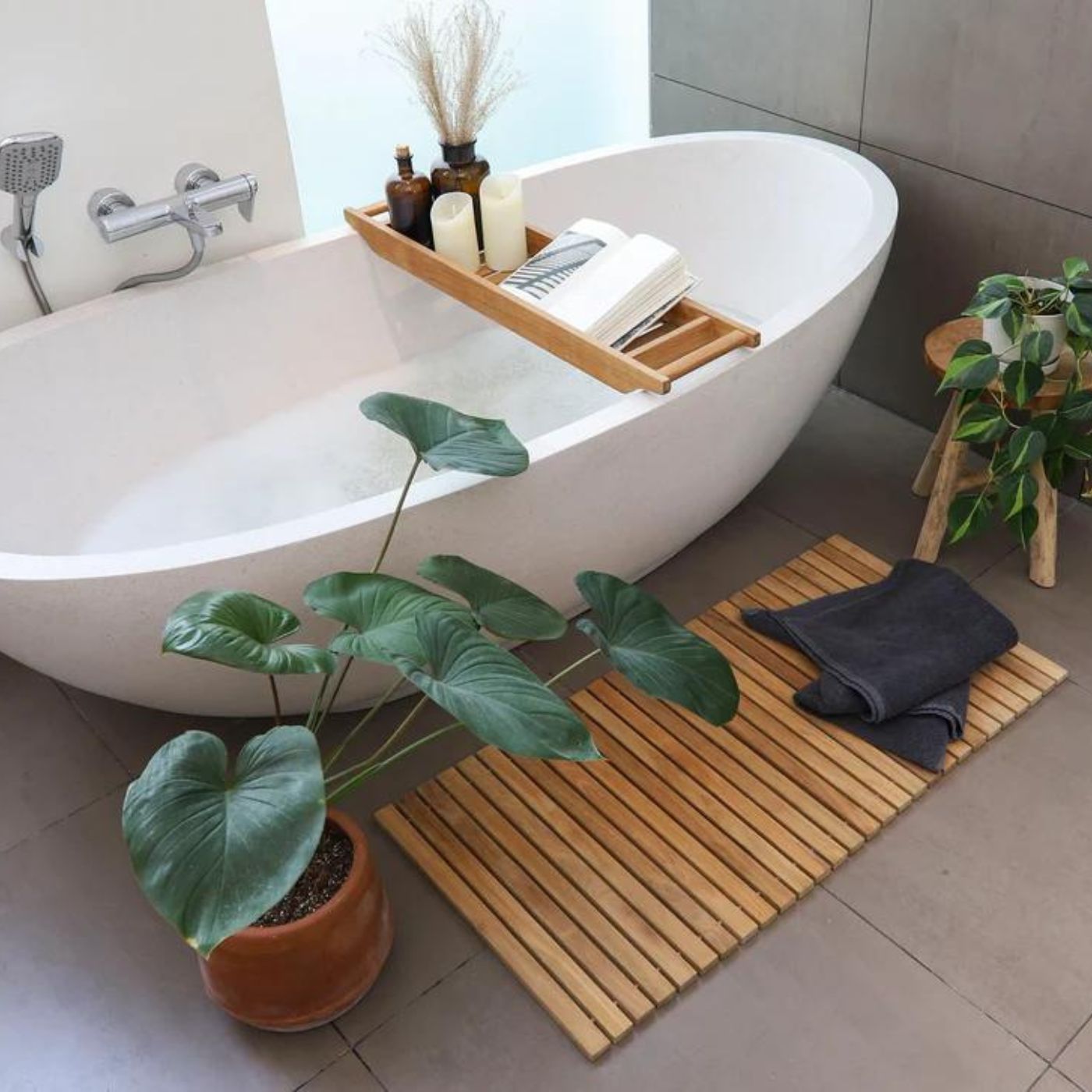
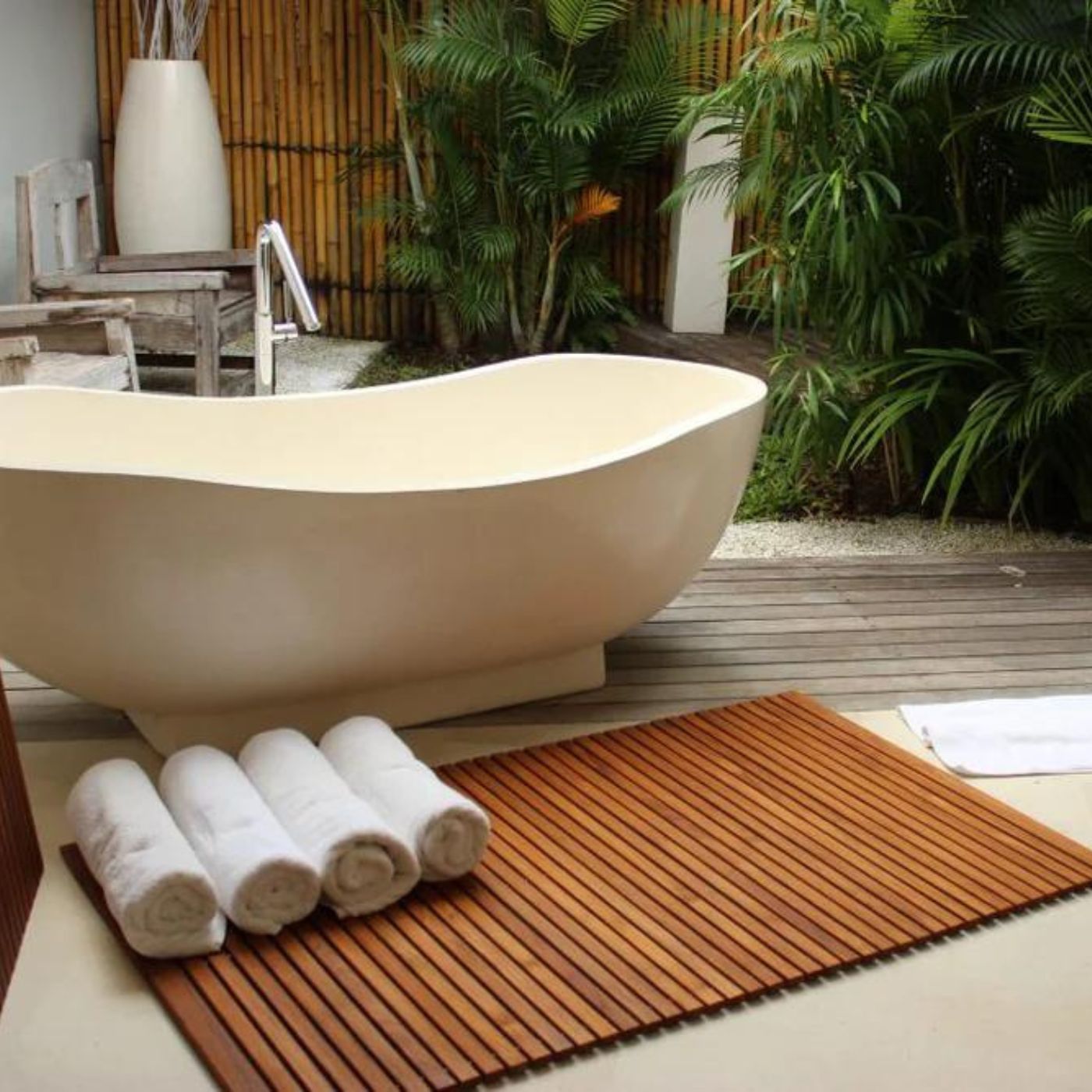
These characteristics are also why teak isn't limited to patios. It works particularly well for shower benches, bath mats, stools, and other areas where wood and moisture regularly meet.
Sourcing Matters, Too
Choosing a wood species is only part of the equation. Where that wood comes from matters as well.
Responsible forestry helps ensure that the materials used today don't come at the expense of forests tomorrow.
At Nordic Teak, our furniture is made from solid teak that is sustainably sourced through our partner Indonesian tree farms. We believe furniture should be designed not only around how it looks when it arrives, but around how it was sourced and how long it can remain useful.
We also partner with One Tree Planted to support reforestation efforts with every purchase.
Is Teak Worth It?
Teak generally comes at a higher initial cost than many common outdoor furniture woods. Looking only at the purchase price, materials such as pine, acacia, or eucalyptus may appear more economical.
But furniture isn't always best evaluated by its first day of ownership.
Maintenance, weather resistance, durability, versatility, and expected lifespan all contribute to its long-term value.
For someone looking for inexpensive furniture for a short-term space, teak may not always be necessary.
For someone looking for furniture designed to remain part of an outdoor space for years, teak's natural characteristics become much more compelling.
Built for Life Indoors and Out
There's a reason teak has earned such a strong reputation for outdoor furniture.
It's not simply because it's a hardwood. It's the combination of density, natural oils, moisture resistance, durability, and graceful aging that sets teak apart from many other furniture woods.
At Nordic Teak, those characteristics are at the heart of what we make: solid teak furniture designed around clean, Scandinavian-inspired forms and made to live comfortably both indoors and outdoors.
Whether it's a dining table on the patio, a bench in the garden, or a teak mat in the shower, the material is chosen with the same idea in mind:
Use a naturally durable material to create something you'll want to keep.